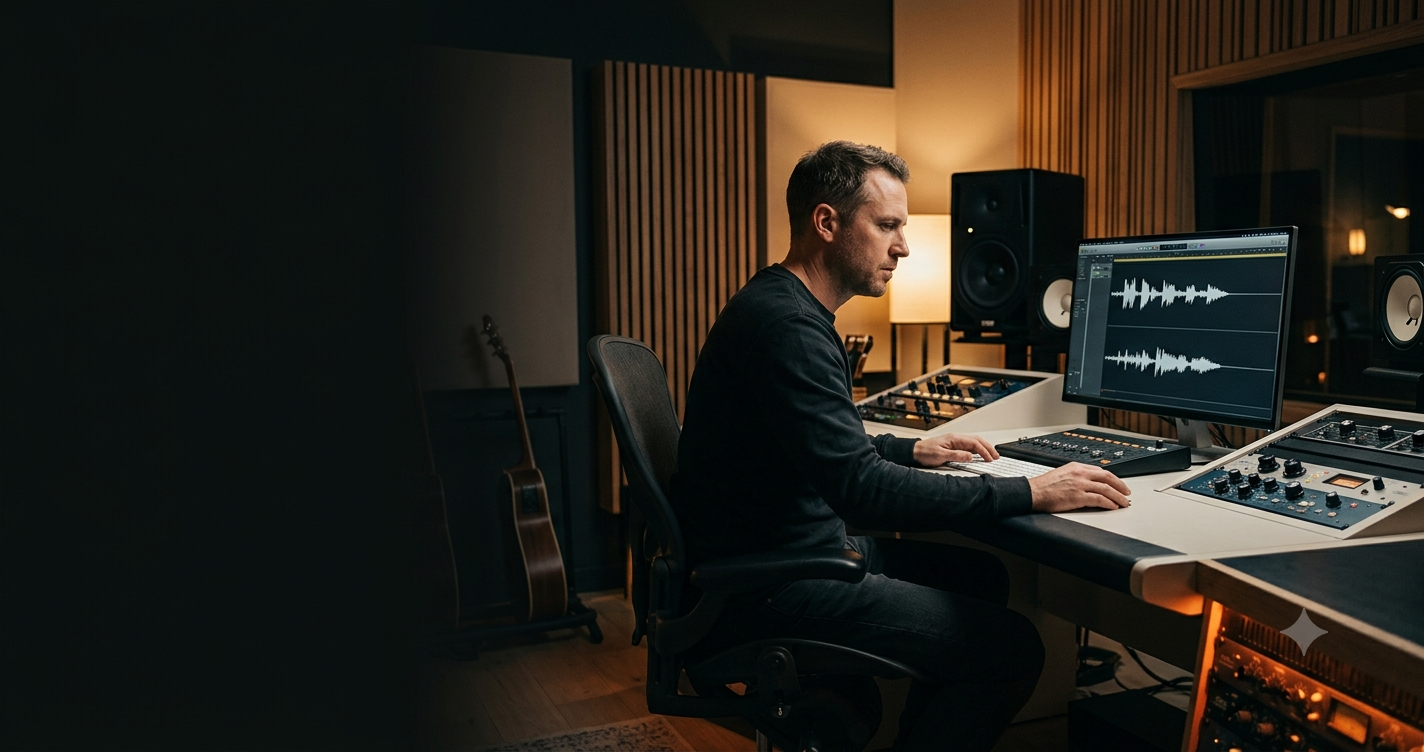
Real Talk Before Your First Studio Session: Too Much Creativity Can Kill a Song.
If you’re about to book your first studio session in Nairobi, let me save you some money, stress, and unnecessary takes: the best song in your phone is probably not the one with the most ideas. It’s the one with the clearest idea.
I’ve watched this happen in real sessions with Mugithi, Kikuyu Benga, Lingala, Hip Hop, and voice-over artists. An artist walks in with ten melodies, three bridges, stacked ad-libs, a rap verse, a guitar solo, and a “surprise” switch-up after every few bars. They think they’re showing range. Most times, they’re hiding the song.
At Studio 56 KE, where we’ve recorded artists like Samidoh, Kuruga Wa Wanjiku, Wachuka Muchendu, and Waithaka Wa Jane, one lesson keeps repeating itself: simple doesn’t mean basic. Simple means the listener knows what to carry home.
The Song That Travels Is Usually the Simple One
A strong Kenyan song has to survive real life.
It has to sound good on a phone speaker. It has to cut through matatu noise. It has to be easy enough for someone to send on WhatsApp without explaining it. It has to work at a wedding, in a kinyozi, in a club, at a ruracio, or on someone’s TikTok video with bad lighting and pure vibes.
That’s why Mugithi and Benga are such powerful teachers. Listen to how many big Mugithi moments are built around a phrase people can answer back to. The guitar may be sweet, the performance may be full of character, the story may be deep, but the hook is usually very direct. You hear it once, and your mouth already knows what to do.
Same with Kikuyu Benga. The groove can be rich, the musicianship can be serious, but the part that moves from person to person is often simple. Repetition. Call-and-response. A melody that doesn’t need a music degree.
TikTok Mugithi and Benga trends are living proof. Kikuyu Benga videos, including Musaimo wa Njeri moments, Kambapiano, Kenya’s own Amapiano flavour, and Mugithi live event clips are trending in 2025/2026 because the hooks arrive fast. Nobody pauses TikTok to admire your complex second pre-chorus. They either feel it immediately, or they swipe.
The Science Agrees: Popular Music Rewards Clarity
This isn’t just producer superstition.
A 2012 study published in Scientific Reports by Serrà and colleagues analysed over half a million popular songs from 1955 to 2010. The researchers found that chart music had become progressively more homogenous in pitch variety, timbral diversity, and loudness. In plain English, successful popular music has moved toward more consistent patterns, not endless complexity.
Source: https://www.nature.com/articles/srep00521
Now, that doesn’t mean every hit song sounds the same. It means listeners reward songs that are easy to process. The brain likes fluency. If a melody is easy to follow, if a rhythm is easy to enter, if a chorus lands where the body expects it, people relax into it. They sing sooner. They dance sooner. They remember sooner.
That’s the simplicity argument.
Not “make boring music.” Not “copy what’s trending.” The point is sharper than that: make the center of the song clear enough for people to grab.
Simple Is Not Lazy, It’s Disciplined
Some artists hear “keep it simple” and think the producer is trying to reduce their creativity. That’s not it.
Lingala is not lazy. Amapiano Kenya is not lazy. Good Mugithi guitar work is not lazy. Benga rhythm sections are not lazy. These styles can have deep groove, layered percussion, clever bass movement, harmony, texture, and performance detail. But the melody sitting on top often feels natural. That’s the magic.
The richness is underneath. The clarity is on top.
A Lingala-style arrangement can have beautiful rhythmic movement, but the vocal phrase still needs to be something people can hold. An Amapiano log drum can make the whole room move, but if your chorus is fighting the groove, you’ve lost. A Mugithi track can have great guitar licks and live energy, but if the main phrase isn’t memorable, the song won’t travel the way it should.
The mistake many artists and producers make in music production is letting the richness contaminate the clarity. They add a harmony that competes with the hook. They add a counter-melody that distracts from the chorus. They keep changing the rhythm to “make it interesting” until the listener has nowhere to stand.
Creativity should support the song. It shouldn’t bully it.
Where Complexity Actually Works
There’s a place for cleverness. I’m not telling you to remove all personality from your music. That would be terrible advice.
Complexity works best when the listener already trusts the song. Give them a clear hook first. Give them a groove they understand. Give them a chorus they can predict. Then, one clever move will hit harder.
Maybe it’s one lyric twist in the second verse. Maybe it’s an unexpected chord in the final chorus. Maybe it’s a small production detail in the mixing that someone notices after replaying the song. Maybe it’s a backing vocal response that comes in late and makes the whole thing lift.
That kind of detail rewards repeat listening because it doesn’t fight the main idea. It sits behind it like seasoning.
In the studio, this matters. If you’re searching for a music studio near me or recording studio near me because you’re ready to record, understand this before you walk in: studio time is not magic dust. A good recording studio Nairobi setup can capture you well, guide your performance, shape your sound, help with mixing and mastering, and bring polish. But if the song has no center, polish just makes the confusion louder.
Before You Book a Studio Session in Nairobi, Do This
If you’re preparing for your first studio sessions at a music studio Nairobi artists trust, come in with a defined song. The studio is for capturing and refining, not discovering the whole song from zero while the clock is running.
Here’s the practical checklist I’d give any upcoming artist before booking:
- Start with the hook alone. Sing it with no beat, no guitar, no effects. Can someone hum it after one listen? If not, simplify it before you record.
- Add back only what serves the hook. That extra ad-lib, harmony, guitar line, rap response, or drum fill must earn its place. If it makes the chorus less clear, remove it.
- Test the song on non-musicians. Don’t only play it for producers and friends who want to sound deep. Play it for someone who’ll tell you, “Hiyo chorus imeshika,” or “Sijashika bado.”
- Think about where the song will live. Your track won’t only be heard through studio monitors. It’ll play on a phone speaker, in a matatu, at a wedding, on TikTok, and inside noisy Nairobi life. Simple songs survive that journey.
- Come to the recording session with the song already defined. Know your key, your structure, your hook, your lyrics, and your emotional direction. We can refine the sound, tighten the delivery, and build the arrangement, but the song needs a backbone.
That’s the real difference between an artist who burns hours and an artist who gets results.
If you’re making Mugithi, Lingala, Benga, Hip Hop, Amapiano Kenya, or modern Kikuyu music, don’t confuse “more” with “better.” The listener doesn’t need every idea you have. They need the right one, delivered clearly.
Book a session with us at Studio 56 KE and let’s shape the song properly.
WhatsApp: Muriithi WaQuail
https://wa.me/254726447094?text=Hello%20Studio%2056%2C%20I%20want%20to%20book%20a%20sessio
Leave a Reply